Keeping Students Accountable Without Stopping Learning
As an art teacher I have very limited time with students. Some students I only see once a week for an hour while others I see on a daily basis. Some art lessons only last about 45 minutes, so when behavior becomes an issue I don’t have time to stop class and work with an individual. Having simple rules and easy follow through response is important. In every classroom, even art, misbehavior happens. It’s part of working with students who are still learning how to manage emotions, choices, and relationships. The challenge for all teachers is responding in a way that addresses the behavior without derailing instruction for everyone else. One strategy that has made a tremendous difference in my art room is the use of structured apology letters paired with simple follow-up documentation.
This approach turns a disruption into a moment of reflection while allowing the rest of the class to stay focused and on task.
Because I have taught art to 4 year olds up to 16 year olds I have needed a wide range of apology letters. Below are samples of apology letters from my Teachers Pay Teachers shop which you can download at Canvas & Core
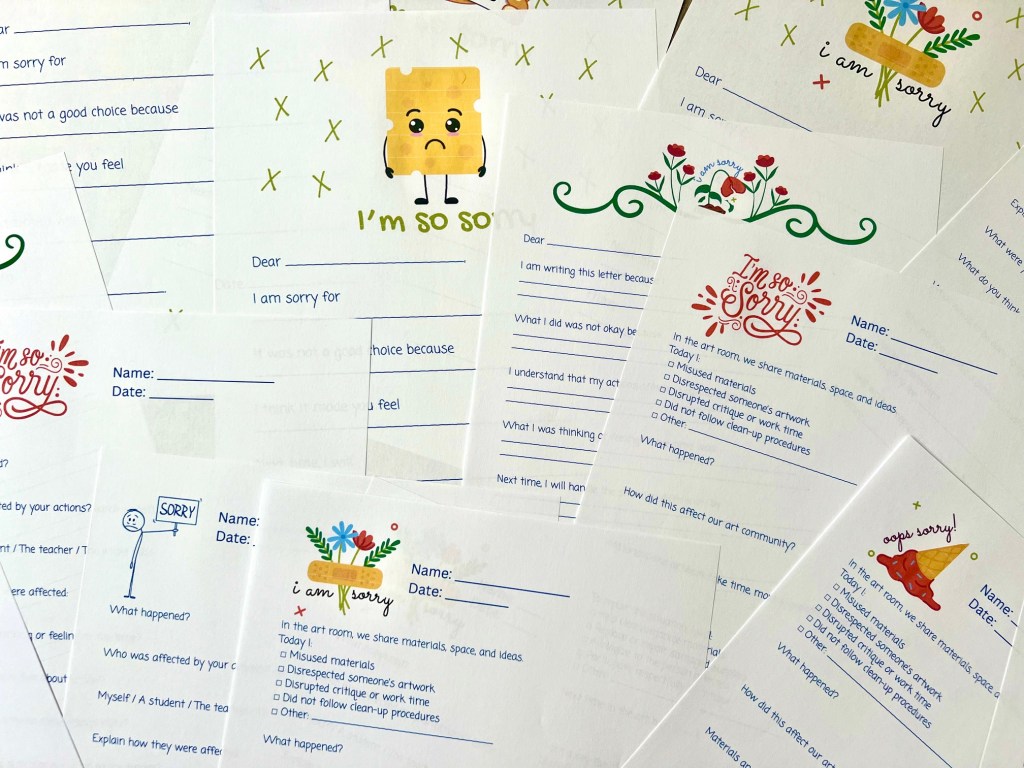
Implementing Apology Letters in the Classroom
For this system to work well, it’s important that expectations are clearly explained to students from the start. I introduce the process early in the year so there are no surprises. Students are told they will receive two warnings if they choose not to follow classroom or school expectations. These warnings give them an opportunity to redirect their behavior and rejoin the learning without consequence.
If the behavior continues after the second warning, the next step is simple and calm: they are quietly handed an apology letter to complete. There is no public discussion and no disruption to the lesson. This allows the class to continue working while the student takes time to reflect.
Students are encouraged to use this time to think about:
- What choice they made
- How it affected the class or learning environment
- What their next steps should look like
They also know the letter will be shared with their parents and may be seen by administration, so what they write—and how they choose to act afterward—matters.
Once the letter is finished, the student returns to their work and has the opportunity to finish the class strong. One of my favorite things to share with families is not the mistake itself, but the maturity and responsibility a student showed afterward. We all make poor choices at times; what defines us is how we respond. I love being able to recognise that growth.
After the letter is completed, I treat it as a reset. The issue is considered resolved, and the student is welcomed back in good standing. They can walk away feeling proud that they turned the situation around and demonstrated character. On the other hand, if they chose not to reflect or take accountability, that becomes part of the learning too. Either way, the process makes the outcome clear and helps students see that their decisions—both negative and positive—carry meaning.
This structure reinforces that mistakes are not the end of the story; they are an opportunity to learn, repair, and move forward.
It Protects Instructional Time
One of the biggest benefits is that I don’t have to stop teaching to manage one student’s behavior. After two warning, students know the next step: they will be given an apology letter to complete. Because the expectation is clear and consistent, there is no lengthy back-and-forth or power struggle which I hate.
Instead of pausing the lesson to lecture or conference immediately, I can continue on with the art lesson while the student reflects independently. The class keeps learning, and the situation is handled calmly and efficiently.
It Teaches Reflection, Not Just Compliance
Many students have never been taught how to truly apologize or take accountablity. Writing allows them to slow down and think about:
- What they did
- Who it affected
- Why it mattered
- How they can make a better choice next time
This moves discipline away from punishment and toward responsibility and growth. Students begin to recognize patterns in their behavior and understand that their actions have impact.
It Creates a Clear System of Accountability
Using written apologies also creates a natural paper trail. Each letter documents the incident and the student’s reflection, helping establish consistency and accountability over time. If patterns emerge, there is already documentation to support conversations with families, support staff, or administration. I found this especially helpful when I had to go between multiple school every week.
It Supports Communication With Families
Teacher follow-up forms make it easy to communicate what happened in a professional, straightforward way. Families can see:
- The concern that occurred
- The student’s reflection and response
- Whether the behavior improved afterward
This keeps communication transparent and solution-focused rather than reactive.
It Builds a Calm, Consistent Classroom Culture
Because the process is predictable, students understand that choices lead to reflection—not embarrassment or confrontation. The classroom environment stays steady, learning continues, and behavior is addressed with dignity.
For teachers, this means:
- Less time managing disruptions
- More time teaching
- Consistent documentation when needed
- A practical system that supports both structure and relationships
A Simple Tool That Makes a Big Difference
Ready-to-use apology letters and follow-up forms save time while reinforcing responsibility. They provide a structured way to address behavior, maintain momentum in the classroom, and help students learn an essential life skill: owning their actions and making things right.
It’s a small shift that leads to stronger accountability, clearer communication, and a classroom that keeps moving forward—exactly where we want our students to be.
Adding Meaningful Accountability: Keeping Families in the Loop
One way I ensure students take the apology process seriously is by letting them know their writing will be shared with their parent or guardian. Students are informed that a copy of their letter will go home, along with a brief teacher follow-up form summarizing how they handled the rest of the class or day. This follow-up communicates whether the student finished strong, demonstrated improved choices and good character, or chose not to participate or take responsibility.
This added layer of transparency helps students understand that their response matters just as much as the original behavior. Knowing that others will see how they chose to handle the situation encourages more thoughtful reflection and often leads to more genuine effort. It also allows families to see both sides of the story, the mistake and the opportunity for growth.
By connecting reflection, documentation, and home communication, the apology letter becomes more than a consequence; it becomes a tool for character development supported by both school and family.
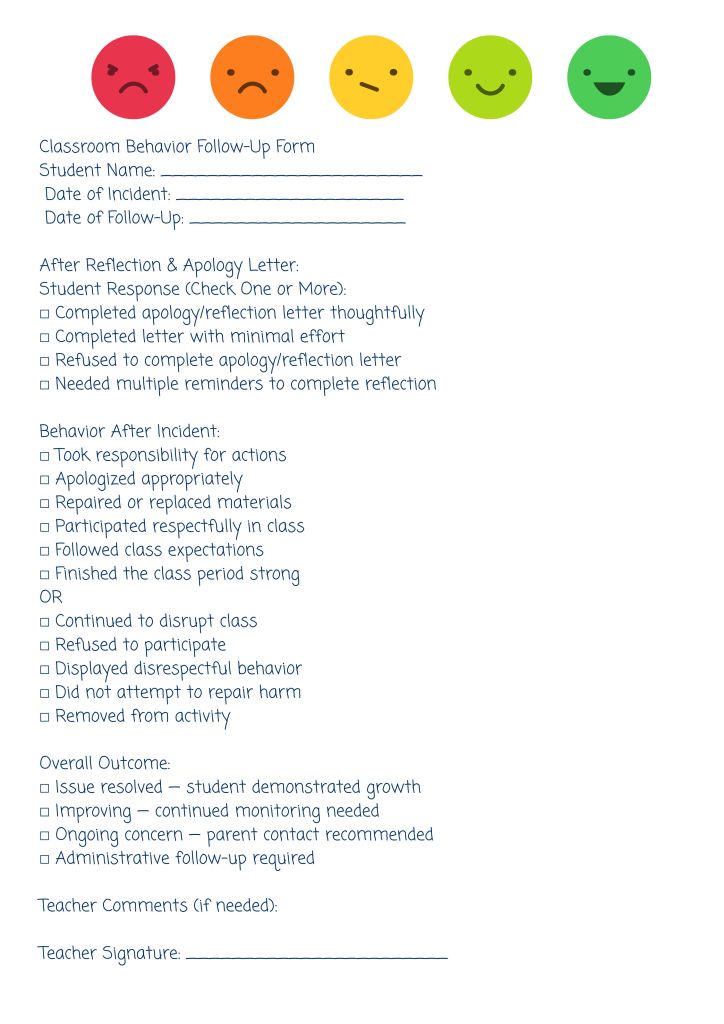
Here is an example of a teacher follow up that you can download at my Teachers Pay Teachers shop at Canvas & Core




 Canvas & Core Art